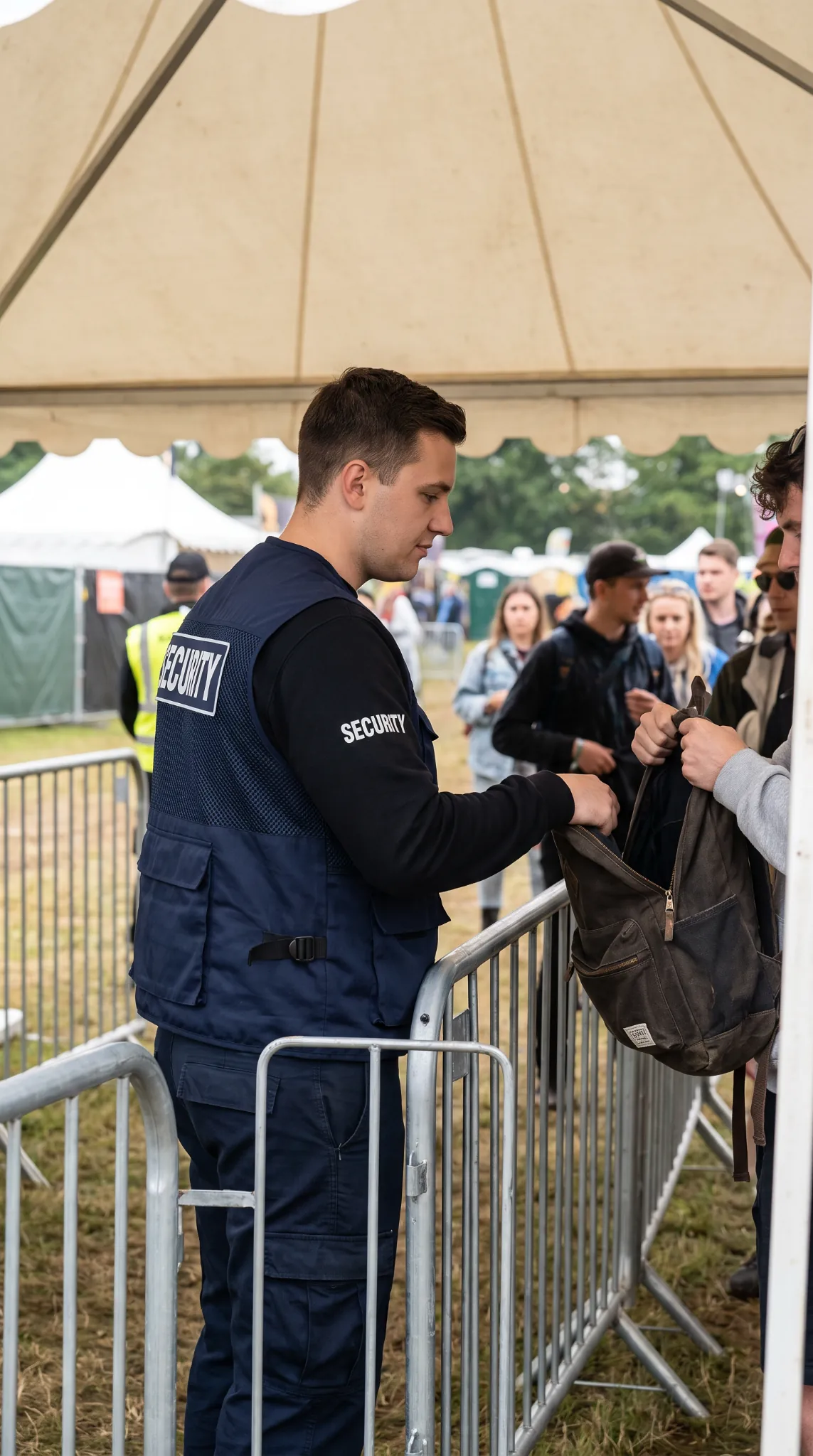
Entrance monitoring
Guest-direction and admission-support duties performed under organizer-approved procedures.
Event security works best when entrances, assigned zones, guest flow, prohibited items, key contacts and escalation procedures are agreed before doors open.
Scope depends on event size, venue rules, schedule, public access, organizer responsibilities and applicable requirements.
Guest-direction and admission-support duties performed under organizer-approved procedures.
Visible coverage for entrances, corridors, parking areas, restricted zones or other defined posts.
Defined radio or phone contacts, incident escalation and objective documentation.
The event organizer should define the venue capacity, schedule, entrances and exits, ticketing or invitation process, prohibited items, alcohol service if applicable, expected guest profile and any history that may affect planning.
The security scope should distinguish security duties from ushering, ticket scanning, medical support, traffic direction and venue operations. When other teams are involved, the event plan should state who leads each type of response.
Before the event, the organizer and security contact can identify who may make operational decisions, when police or emergency services should be contacted and how information is recorded.
Event service is subject to advance review, staffing availability, a written agreement and confirmation of applicable requirements.
Send the event details early so the venue, duties, staffing request and communication plan can be reviewed.